


What Happens on Your First Helicopter Flying Lesson?
From the briefing on the ground to your first experience of the controls, here is how a first helicopter lesson typically unfolds – and where the exact details can differ between lessons.
What should you expect?
Expect to arrive knowing very little. That is exactly what a first lesson is for.
You can reasonably expect an introduction and briefing, an explanation of the helicopter and its controls, time in the aircraft with an instructor and – on the hands-on experiences described here – the opportunity to experience flying the helicopter for yourself.
The precise sequence, amount of hands-on control time and surrounding extras can vary with the lesson you choose. You do not need previous flying experience; the point is to discover what flying a helicopter feels like.
Your lesson starts with a briefing
A first helicopter lesson is not normally a case of arriving, climbing into the aircraft and immediately taking off.
The current one-to-one trial lessons include a pre-flight briefing. For the 20 and 30 minute lessons, the experience information states that the instructor explains how the helicopter flies and the effects of the controls before the flight begins.
That gives you some context before the helicopter is airborne. The aim is not to test what you already know; it is to make the aircraft and what happens next easier to understand.
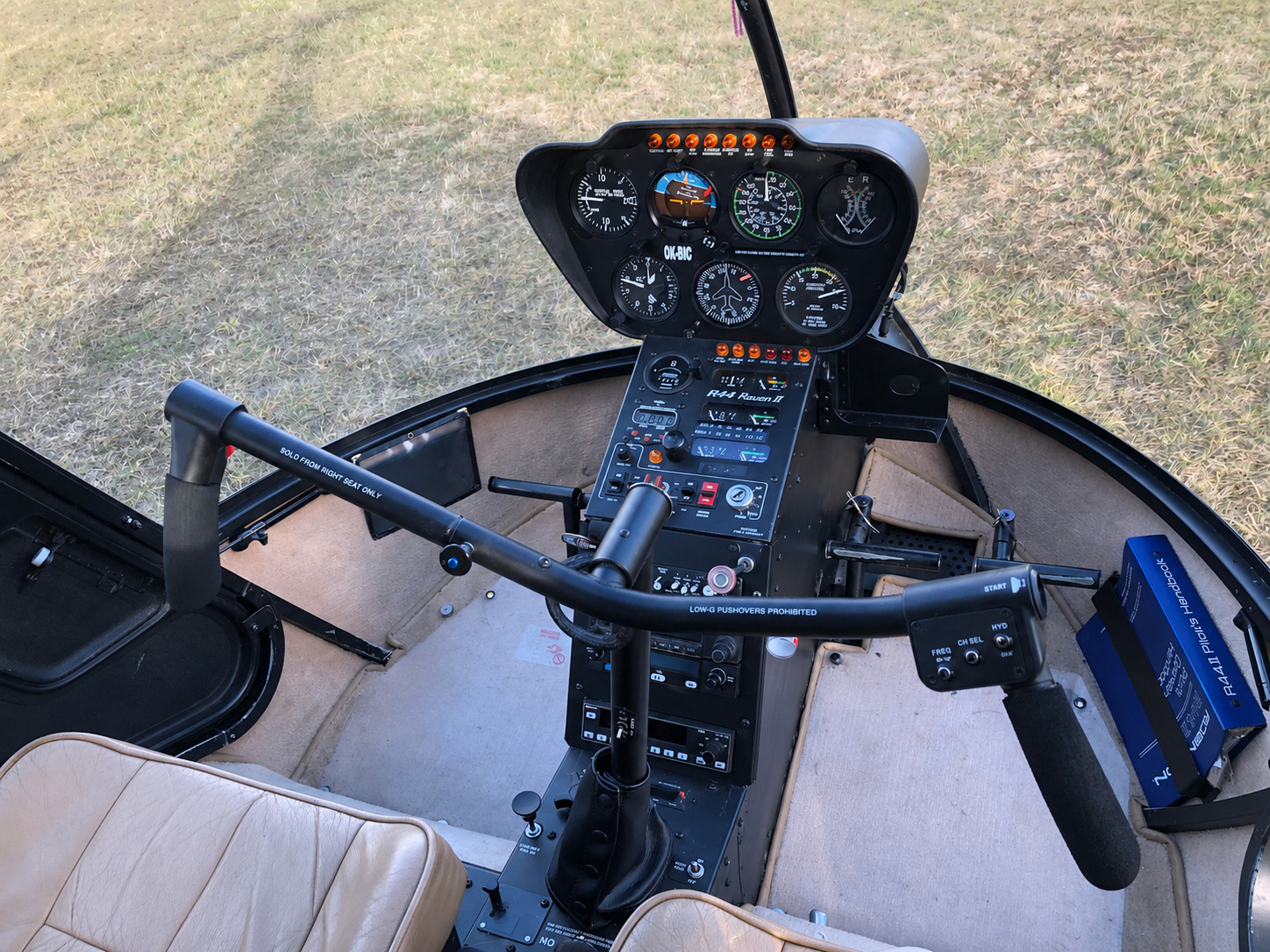
Getting familiar with the cockpit
The three controls a beginner is most likely to hear discussed are the cyclic, collective and anti-torque pedals.
- CYCLIC
- Controls movement in the horizontal plane – forward, back, left and right.
- COLLECTIVE
- Changes the lift produced by the main rotor and is used to control height.
- PEDALS
- Control the direction in which the nose points and help manage yaw.
You are not there to memorise a technical manual before take-off. The useful part is understanding enough to recognise what the instructor is demonstrating once you are in the air.

You go flying
On the current one-to-one trial lessons, this is not simply a passenger flight dressed up as a lesson.
The 20 minute experience includes 20 minutes flying one to one with a qualified instructor, preceded by the flight briefing, with the student given the opportunity to take the controls. The 30 minute version follows the same broad format with 30 minutes flying and approximately 60 minutes allowed for the overall experience.
The 40 and 60 minute lessons retain the same underlying idea: dedicated one-to-one flying time with an instructor. The main difference is how much time you want to spend in the air.

Taking the controls for yourself
“Taking the controls” means supervised flying instruction, not being left to work things out for yourself.
The current one-to-one lesson information states that the student is allowed to take the controls and fly the aircraft while the experience itself is one to one with a qualified instructor.
Your instructor remains beside you, guiding the exercise and the flight while you experience how the helicopter responds.
The exact sequence varies between lessons and instructors, so you may not use each control in the same order or for exactly the same amount of time.
Not every first helicopter experience follows the same format
The one-to-one lessons are the simplest format to picture, but the current range also includes two alternatives.
Three short flights shared between three participants, combining two observation sectors with one hands-on flying sector.
VIEW TACTICAL FLYINGApproximately 2.5 hours overall, including approximately 15 minutes flying with hands-on helicopter flying as part of a wider look at training and pilot careers.
VIEW PILOT INSIGHTSThe flight comes to an end
Once the flying portion is complete, the experience returns to the ground. What happens immediately afterwards depends on the package you booked.
Some current trial lesson descriptions include a certificate signed by the instructor. Spectators are welcomed on a number of experiences and may take photographs. Pilot Insights includes additional elements such as a light lunch, career discussion and, where possible, a hangar tour.
Those extras are not universal, so if something matters to you beyond the flying itself, check the individual lesson information before booking.
It can be a one-off – or the start of something more
For many people, one helicopter lesson is exactly what they wanted: the chance to experience flying a helicopter for themselves.
If you land wanting another lesson, the current trial lesson information states that qualifying flying time can count towards a pilot licence. For context, the UK Civil Aviation Authority requires at least 45 hours of helicopter flight instruction for a PPL(H), completed through an Approved Training Organisation or Declared Training Organisation.
There is no expectation that a first lesson has to lead anywhere. It can simply be the day you finally get to say: “I flew a helicopter.”
If you would rather experience helicopter flight before trying the controls yourself, consider a passenger ride first. You can enjoy being in the aircraft and seeing the view from above, then decide whether a flying lesson appeals afterwards. Compare UK helicopter rides →
Your first lesson is an introduction, not a test
You arrive as a beginner, your instructor explains what you need to know, and then you get to experience the aircraft in the environment it was built for: the air.
You are unlikely to finish the lesson feeling that you have “learnt to fly a helicopter”. That is not the point. The point is that you now know what it feels like to sit in the cockpit, understand the basic controls and experience the helicopter responding under instruction.
Choose your first helicopter lesson
Compare the available lesson formats and flying times, or start with the locations and venues nearest to you.
General aviation information in this guide was checked against primary or technical sources. Individual product details are based on the current experience information for lessons offered through HelicopterLesson.co.uk.