


Can I Really Fly a Helicopter on My First Lesson?
What does “taking the controls” really mean on a first helicopter lesson? We look at how the handover works, how much flying you may do and why supervised flying is different from going solo.
Yes. You really can take the controls on your first lesson.
You do not have to complete weeks of training before experiencing the controls of a helicopter. On the current hands-on lessons, first-time flyers can be given the opportunity to fly under the supervision of a qualified instructor.
The one-to-one trial lessons explicitly give the student the opportunity to take the controls and fly the aircraft. Tactical Flying includes a hands-on sector, while Pilot Insights also includes hands-on helicopter flying.
The important distinction is what the word fly means in a first lesson. You are not being sent off alone or placed in charge of the aircraft. You are flying under the supervision of a qualified helicopter instructor.
You can be on the controls without being on your own
This is where a helicopter lesson differs from simply being a passenger. The instructor can demonstrate how the aircraft responds and then give you the opportunity to experience that response through the controls yourself.
The UK Civil Aviation Authority makes the distinction clearly when discussing introductory passenger flights. If somebody wants to handle the controls, the CAA says a trial lesson should be booked and an appropriate instructor rostered for the flight.
So the hands-on part is not a marketing flourish added to a sightseeing flight. It is the reason a trial lesson is a different type of flying experience.
There should never be any doubt about who has control
In formal helicopter instruction, handing the controls from instructor to student is a deliberate process. The point is simple: both people in the cockpit need to know exactly who is flying the aircraft at any given moment.
European flight-instructor guidance describes an explicit verbal handover procedure between instructor and student. The exact wording used on your lesson may vary, but the principle does not: control is passed clearly and the instructor remains responsible for the flight.
Taking the controls is real flying. It happens inside a structured lesson, with the instructor beside you and ready to take control when needed.

A helicopter has several controls working together
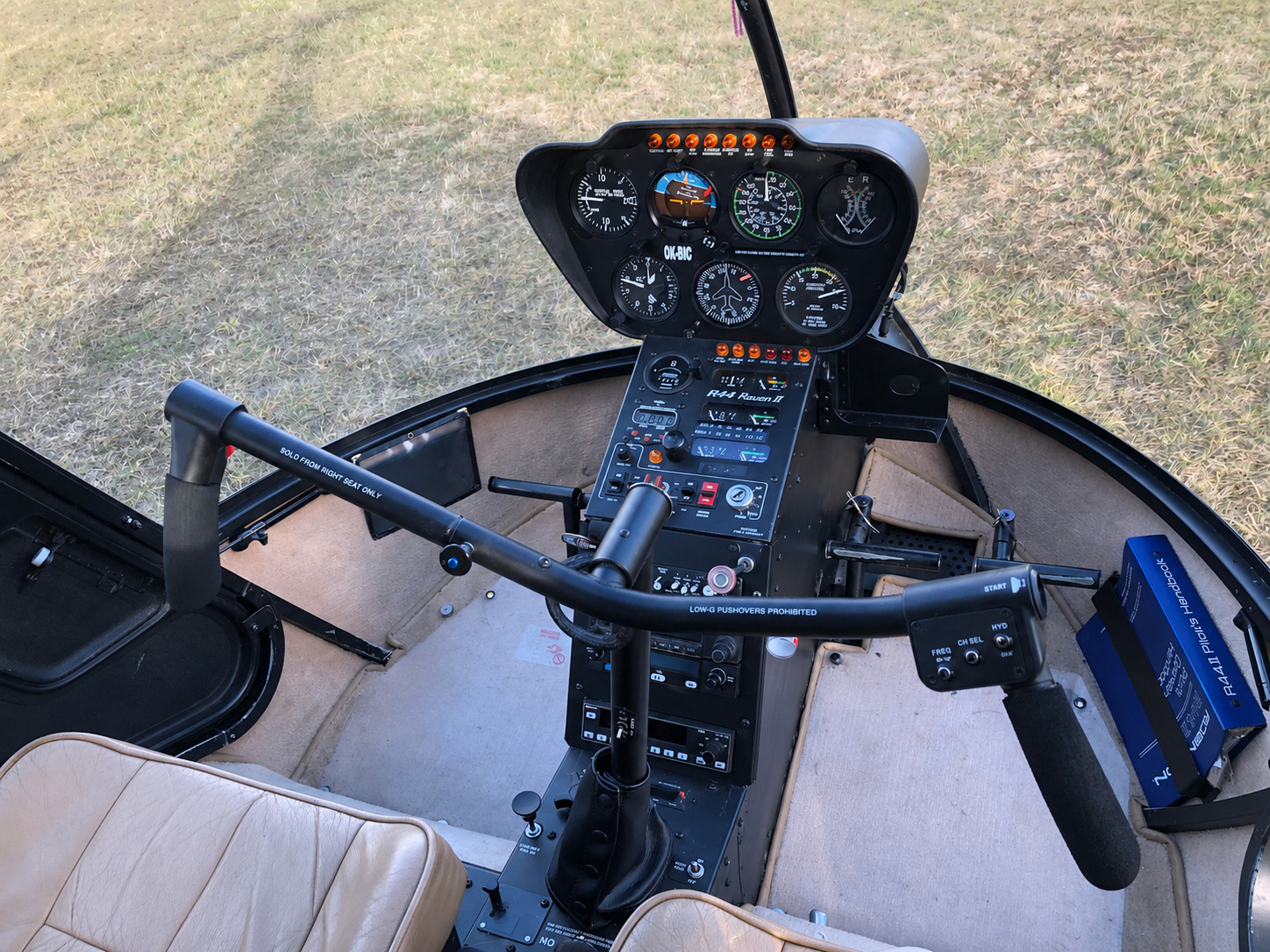
The main controls you will hear discussed are the cyclic, collective and anti-torque pedals. They affect different parts of the helicopter’s movement, but they do not behave as three completely separate systems.
- CYCLIC
- Used to control movement in the horizontal plane: forward, back, left and right.
- COLLECTIVE
- Changes the lift produced by the main rotor and is used to control height.
- PEDALS
- Control yaw and the direction in which the nose points.
A first lesson is not about mastering all three. It is about beginning to understand the relationship between what you do with a control and what the helicopter does next.
Want the full day-in-the-life version first? Read what happens on your first helicopter flying lesson →
How much of the lesson do you personally fly?
This is where it is important to separate flying time from a guaranteed number of minutes physically at the controls.
The 20, 30, 40 and 60 minute one-to-one lessons specify the amount of flying time and state that the student is allowed to take the controls. They do not, however, promise that every advertised flying minute will be spent with the student controlling the helicopter.
That makes sense in a lesson. The instructor also needs to demonstrate, explain, monitor the flight and retain control whenever required. Exactly how the airborne time is divided can depend on the lesson and the individual flight.
So a 30 minute lesson means 30 minutes flying, not a guaranteed 30 minutes continuously on the controls.
“Hands-on” does not mean exactly the same thing in every lesson
The current range gives three different ways to experience flying a helicopter for yourself.
Choose 20, 30, 40 or 60 minutes flying with an instructor. The student is given the opportunity to take the controls, but a fixed hands-on duration is not stated.
COMPARE LESSONSThree short flights are shared between three participants: two observation sectors and one hands-on sector.
VIEW TACTICAL FLYINGApproximately 15 minutes flying within a broader 2.5 hour experience, including hands-on helicopter flying.
VIEW PILOT INSIGHTSNo. Taking the controls is not the same as flying solo
A first trial lesson is instructional flying with an instructor, not a solo flight. You may be controlling the helicopter for part of the lesson, but the instructor remains there to supervise, guide and intervene when necessary.
Solo flying belongs much later in formal pilot training. A UK PPL(H) requires at least 45 hours of helicopter flight instruction, including dual instruction and supervised solo flying. That puts a first trial lesson in its proper place: it is an introduction to flying, not permission to operate independently.
None of that makes the first hands-on moment less genuine. You are still feeling the aircraft respond to your own input, with the safety and structure of an instructor beside you.
Your first turn at the controls is about feeling the response
You are not trying to prove that you can already fly a helicopter. You are discovering the connection between a control input and the movement of the aircraft.
Helicopter controls are coordinated, and even experienced training material treats new exercises as something to be demonstrated, practised in manageable parts and supervised closely. A beginner does not need to make the whole thing look effortless for the lesson to have done its job.
The memorable part is much simpler: there is a point during the flight when you are no longer only watching what the helicopter does. You are helping make it happen.
Yes, but not in the way “flying it yourself” might first suggest
On the current hands-on helicopter lessons, first-time participants can be given the opportunity to take the controls. That is genuine flying experience, not simply sitting beside an instructor while they do everything.
But it is supervised flying. Your instructor remains responsible for the flight, the exact hands-on time can vary and nobody expects a complete beginner to take command of every part of the aircraft from take-off to landing.
For a first lesson, that is exactly the point: enough guidance to keep the experience controlled, and enough involvement for you to come away knowing what it feels like to fly a helicopter.
Choose your first helicopter lesson
Compare the shared and one-to-one formats, then decide how much flying time you want for your first experience.
General aviation information in this guide was checked against primary or technical sources. Individual lesson details are based on the current experience information for lessons offered through HelicopterLesson.co.uk.